


Budgets
Take control of your company’s budgets and spending
Set budgets to track expenditure in real-time. Stay in control with spend limits. Delegate and scale your business with ease.
Deposits in the Deposit Account are FDIC-insured through Column N.A., Member FDIC
Our investors




Featured on




Powerful budget management for complex organisations

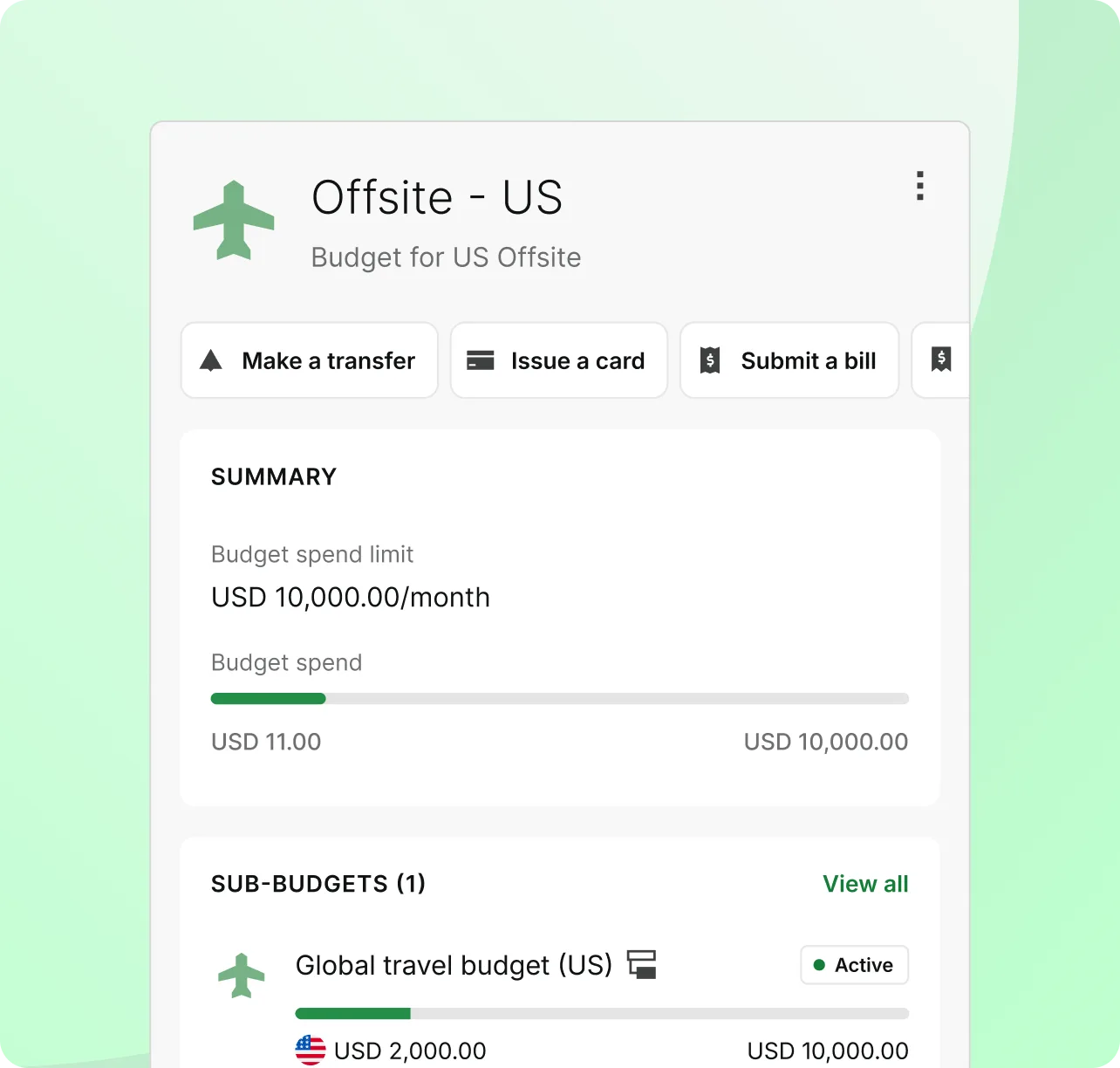
Track expenditure in real-time
Set budgets and sub-budgets to gain real-time visibility on company spend

Get more control
Create spend limits and receive notifications when you’re nearing your budget ceiling

Built for efficient teams
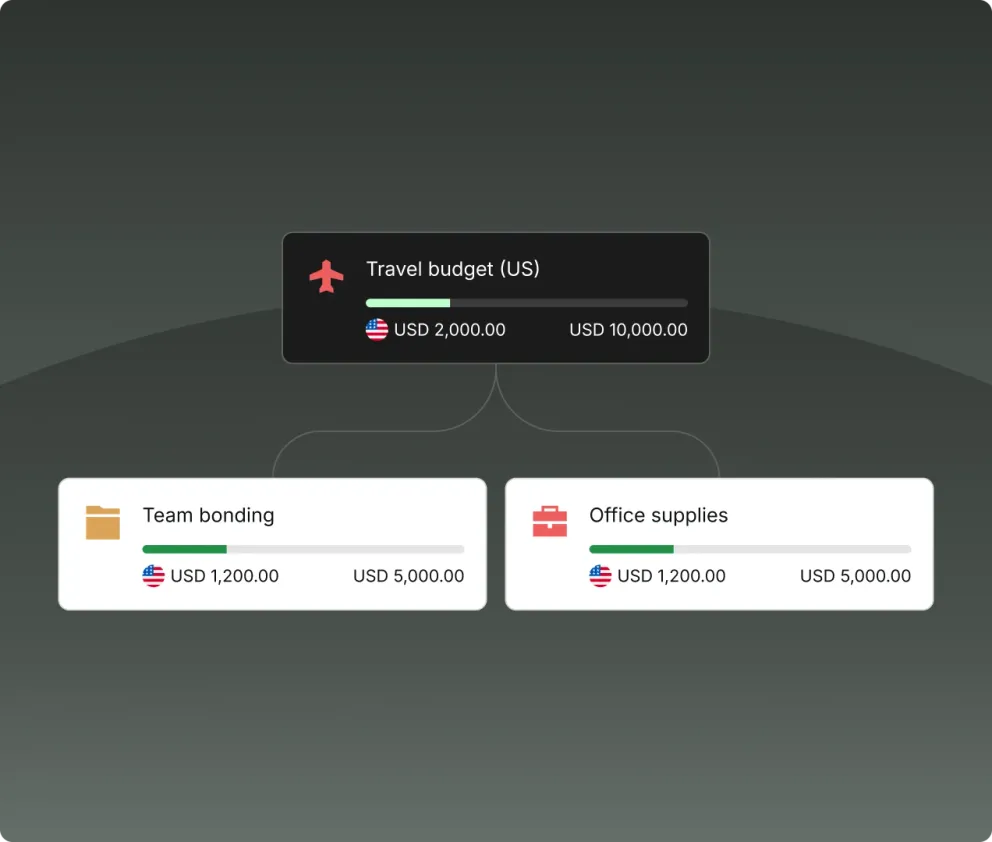
Deploy multi-level budgets across teams and designate owners with complete visibility
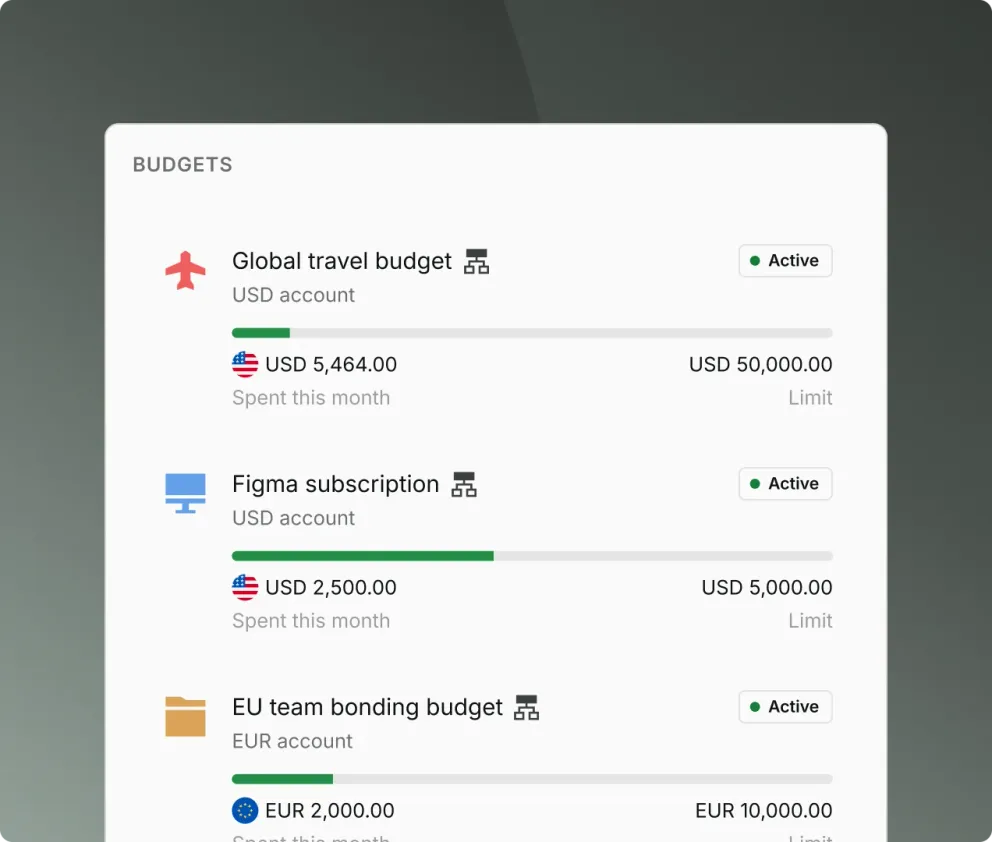
Stay on top of every dollar
Keep a bird’s eye view on company spend in real-time
Manage budget adjustments in just a few clicks
Spend with confidence, not caution
Know exactly how much you can spend without second guessing
Get alerts before budgets are exceeded

Built for growing complexity
Manage multiple teams, projects, and cost centers in one place
Scale your budget structure as your organization grows
Master your company budget management

FAQs about Aspire budget
A budget is a financial plan that estimates how much money a business expects to earn and how much it plans to spend over a given period, such as a month, quarter, or year. It provides a clear overview of anticipated revenue, expenses, and profit, helping companies allocate resources efficiently and ensure sustainable operations. In practice, budgets act as a financial blueprint, guiding decisions, monitoring performance, and keeping spending aligned with strategic objectives.
Budgeting is the process of creating, managing, and reviewing a financial plan over time. It involves forecasting income, allocating expenditure categories, and tracking the difference between planned and actual results. Budgeting helps teams set financial goals, stay agile when conditions change, and make informed decisions about where to cut costs or invest for growth. It’s not just about controlling spend—it’s about enabling smarter, data-driven strategy across the business.
The main purpose of budgeting is to ensure a company has the financial clarity and control it needs to achieve its goals. A budget helps monitor cash flow, plan for upcoming expenses, and maintain accountability across departments. It also supports strategic decision-making by highlighting where funds can be better allocated, identifying inefficiencies, and enabling teams to respond quickly to market changes. Ultimately, effective budgeting builds confidence with investors, management, and employees by showing that the business can grow sustainably and manage risks responsibly.
The most commonly used methods of budgeting are incremental, activity-based, value-based and zero-based budgeting.
- Incremental budgeting Adjusts the previous year’s budget by a set percentage to reflect expected changes. Simple but can perpetuate inefficiencies.
- Activity-based Starts with business goals and identifies the activities and resources needed to achieve them. Focuses on operational efficiency.
- Value-based Allocates funds only to activities that add measurable value or align with company strategy, improving ROI visibility.
- Zero-based Resets all budgets to zero for each cycle, requiring every expense to be justified from scratch. Promotes accountability and lean spending.



Start your journey with Aspire
Open your free account